
The Complete Guide to Streaming TV Ads for Small Business Owners
Most UK business owners still think TV advertising costs at least £50,000. They're wrong, and that misconception is costing them customers.
Here's what changed: 73% of UK households now have internet-connected TVs capable of streaming content. This massive shift broke open a market that traditional broadcasters kept locked to big brands with massive budgets.
We've helped dozens of SMEs launch their first streaming TV campaigns with budgets as low as £1,500. The results? TV-quality reach with Google Ads-level targeting and measurement.
This guide walks you through everything we've learned, from choosing platforms to creating ads that actually convert. No agency fees required.
What Are Streaming TV Ads?
Streaming TV ads appear on services like ITVX, Channel 4, YouTube TV, and the ad-supported tiers of Netflix and Amazon Prime Video. People watch these on their smart TVs, streaming devices like Fire Sticks, gaming consoles, and phones cast to their telly.
Why should you care about this?
Your customers have moved to streaming. Traditional TV viewership keeps dropping whilst streaming grows every year. According to Ofcom's latest Media Nations report, two-thirds (68%) of UK households now subscribe to at least one streaming service like Netflix or Amazon Prime Video.
But here's what makes this really interesting for small businesses: you get the same premium environment as traditional TV adverts, but with better targeting, lower costs, and measurable results.
Traditional TV makes you buy broad audiences. Streaming TV lets you target specific postcodes, demographics, and interests. You can track exactly who watched your ad and what they did afterwards.
Is This Right for Your Business?
Not every business should jump into streaming TV ads straight away.
You're a good fit if:
You're targeting specific UK regions or local areas
You run an e-commerce brand ready to scale
You're building credibility for a service business
Your product or service works well visually
You're already spending £2,000+ monthly on digital advertising
You'll need:
Video content (or budget to create it)
A clear picture of your target audience
At least £1,000-£2,000 monthly budget
A way to track conversions and results
If you're spending under £500 monthly on all marketing combined, test social media ads first. Build that foundation before moving to streaming TV.
Creating Your Streaming TV Ad
Your ad needs to be 15-30 seconds long. That's the sweet spot. You'll want HD video in 16:9 format (minimum 1920x1080 pixels).
Keep the content simple. Hook viewers in the first three seconds. Focus on one clear message. Show your branding prominently. End with a strong call to action.
Production options and rough costs:
Repurpose your best social media videos (£0)
Use Canva or Adobe Express (£500-£1,500)
Hire a freelance video creator (£1,000-£3,000)
Go with a professional production company (£5,000+)
Start by adapting content you already have. That video that performed well on Instagram or Facebook? Polish it up for streaming TV. You don't need a Hollywood production to get results.
Choosing Your Platform
You've got several options for running streaming TV ads in the UK.
ITVX and Channel 4 reach massive British audiences watching premium content. YouTube gives you an enormous reach with a straightforward setup. Amazon Prime Video connects you with high-intent shoppers.
Then you have programmatic CTV platforms. These let you access multiple streaming services from a single dashboard. Platforms like Tatari simplify the process and remove the need to manage multiple campaigns separately
Choose your platform according to where your audience actually watches content, the minimum budget they require, and the targeting capabilities it offers.
My advice?
Start with one or two platforms. Test properly. Then expand based on what works.
Setting Up Your First Campaign
Start with clear objectives.
Do you want brand awareness or direct response? Which geographic areas matter? Who's your target audience?
2.Set a realistic budget.
Plan for £1,500-£3,000 for a meaningful test. Allocate roughly 60-70% to media spend and 30-40% to creative production. Run your initial campaign for at least 4-6 weeks.
3. Configure your targeting carefully.
Most platforms let you target down to the postcode level. Layer on demographics like age, gender, and household income. Add behavioural targeting based on viewing habits and interests. Consider retargeting visitors to your website.
4. Upload your creative and launch.
Follow the platform's specifications exactly. Set frequency caps so you don't annoy people (3-4 views per person per week works well). Schedule your ads strategically; evenings and weekends typically perform better for consumer brands.
5. Monitor and optimise regularly.
Check performance every 3-5 days at first. Adjust targeting based on the data. Test different creative versions. Scale what delivers results and pause what doesn't.
Measuring What Matters
Track these key metrics:
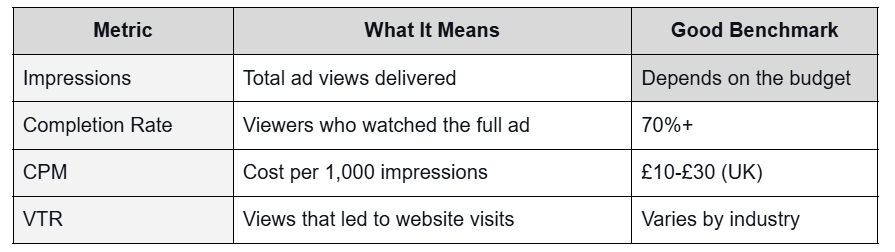
Beyond platform metrics:
Watch your website traffic during the campaign.
Check Google Search Console for increases in branded searches.
Monitor conversion rates and customer acquisition costs.
Use Google Analytics with UTM parameters to properly track traffic sources. If you're driving phone enquiries, set up call tracking.
Ready to Start?
Streaming TV advertising isn't just for massive brands anymore. UK small businesses can now access this channel with reasonable budgets and self-service platforms.
Start with clear objectives, tested creative, and a manageable budget. Choose platforms where your audience actually watches content. Measure everything, learn continuously, and optimise as you go.
If you're ready to explore streaming TV ads, platforms like Tatari offer straightforward entry points without requiring agency-level budgets.
The small screen has become the big screen in most British homes. It's time your business showed up there, too.
Further reading
Ofcom's Media Nations 2024
Top trends from our latest look at the UK’s media